The Eternity Injection: 'Elementary' and Sobriety's Leaky Faucet
the anti-narrativity of sobriety is the exact opposite of boredom.

There is a scene in Elementary (2012-2019) where Sherlock Holmes (Jonny Lee Miller) tells his best friend and ex-sober companion, Joan Watson (Lucy Liu), that he can promise not to use heroin, but that is all he can do — a promise is not a guarantee. Joan stays quiet. She doesn’t try to dissuade him. She knows from experience that all the friendship and love in the world cannot stop an addict from relapse. And so they enjoy their dinner together and the time that is now.

The permanence and illogic of addiction terrifies Sherlock, whose intelligence is a point of immense personal pride. But all the cases he solves cannot fix his addiction, and this fear lingers in the series, which surprisingly focuses on the tremendously difficult work of staying sober. Relapses happen, but they happen off-screen. After Sherlock’s relapse in the last few seconds of the third season finale, we begin the fourth season with him entering a fresh new week of sobriety. He attends multiple meetings a day and goes to work as per usual. Everything has changed, but nothing really has. Over the course of seven seasons, the work of staying sober is still boringly the same, and Elementary wants us to see this so-called boredom is a miraculous gift. In sobriety, there is no grand reward offered for picking up the slack, only new promises to be made.
In most shows tackling addiction, however, relapse usually serves as the narrative climax after several episodes of a character toying with the idea of using again. I don’t think this is necessarily a bad thing when done well; there is comfort in knowing that people do relapse and still move on with their lives. Mae Martin’s semi-autobiographical comedy-drama, Feel Good (2019-2021), features a queer protagonist who relapses mid-season after a newfound romance stirs deep-seated feelings of unworthiness and shame. Before Mae kisses George (Charlotte Ritchie) for the first time, we hear a high-pitched ringing noise that mars the excitement that usually comes with love.
We later learn that Mae’s urges to use are always preceded by this jarring noise; they use to avoid confronting the possibility of heartbreak and rejection. The series, however, does not dramatise their relapses. Within a span of an episode, they are back in rehab learning how to cope with the trail of hurt that relapses leave in their wake. The focus on sobriety is refreshing because it denies both Mae and the audience the chance to indulge in a timeless oblivion where self-destruction ensnares one in an ever-recurring past. The present is always much more difficult to face.

As Leslie Jamison writes in her memoir on alcoholism, sobriety is
often seen as narrative slack, the dull terrain of wellness, a tedious addendum to the riveting blaze. You go to work. You call your friend. You say, I’m sorry I crashed your car into a wall. You say you’ll fix it. Then you do.
Jamison’s memoir muses on the difficulty of representing sobriety — peace just does not make for very enticing literature. The triptych narrative structure of addiction stories goes like this: you use, bottom-out for most of the plot, and are sober for three seconds before the credits roll. Jamison’s terse and short sentences in the aforementioned quote are devoid of lyricism. Like staccatos, they spend no time waiting for a watershed moment that some think sobriety ought to offer. All there is, however, is the never-ending muck.
I rewatched Elementary’s “The Eternity Injection” (3.09) recently after finding myself wondering why sobriety has to go on … forever. It is a remarkably compassionate episode (out of many) which illustrates how sobriety can feel like a relentless and punitive banality. After reaching an emotional plateau in his recovery, Sherlock starts skipping meetings and avoids talking to his sponsor. No one actually sees a problem with this, except Joan, who goes over to Sherlock’s place to check on him, only to be met with his silence and palpable shame over feeling like shit about being sober. He eventually confesses:
My sobriety is simply a grind. It’s just this leaky faucet that requires constant maintenance, and in return, only offers not to drip. Odd, I used to imagine that a relapse would be the climax to some grand drama. Now I think if I were to use drugs again, it would in fact be an anticlimax. It would be a surrender to the incessant drip, drip, drip of existence.
Miller’s portrayal of Sherlock betrays a deep shame that comes with feeling like sobriety ought to give more of … something. Joan tells him that he is alive because of his sobriety and that has to be enough. But he is not entirely sure if his life is a gift that he deserves. Sherlock is undeniably a genius—he wastes no time reminding everyone of that—but years of meetings has led him to wonder if this is it. Sobriety often feels like failure. Why can’t we have a faucet that simply works?
When Sherlock relapses at the end of the third season, no singular climactic reason is given. Yes, he was psychologically tortured in the finale by a man whom he used to do drugs with, who brought him to places where addicts frequent - triggers abound, but Sherlock did not use. His friend/ex-sponsor, Alfredo (Ato Essandoh), was kidnapped. Joan finds his friend in time, and the foe who kidnapped him was defeated. Everything was fixed. But Sherlock uses. He breaks his promise to Joan earlier in the finale: “I am no closer to using today than I was yesterday.”
Sherlock’s relapse may be due to the harrowing events aforementioned and more or none of these reasons at all. It happened, as Sherlock clarifies in the fourth season, because he was an addict. It happened because months ago, he acknowledged that a part of him yearns for the oblivion that addiction provides, and a part of him is sick of the work that sobriety dictates, and a part of him wishes that his undeniably keen senses can be dulled. But in the end, Sherlock’s desire to show up for Joan and be in her life is stronger than all of these parts - and so he works on himself endlessly to stay alive for her.
Well, I may still be [a lose cause]. One of the reasons I work so hard not to lose myself is because I fear that I would also lose you.
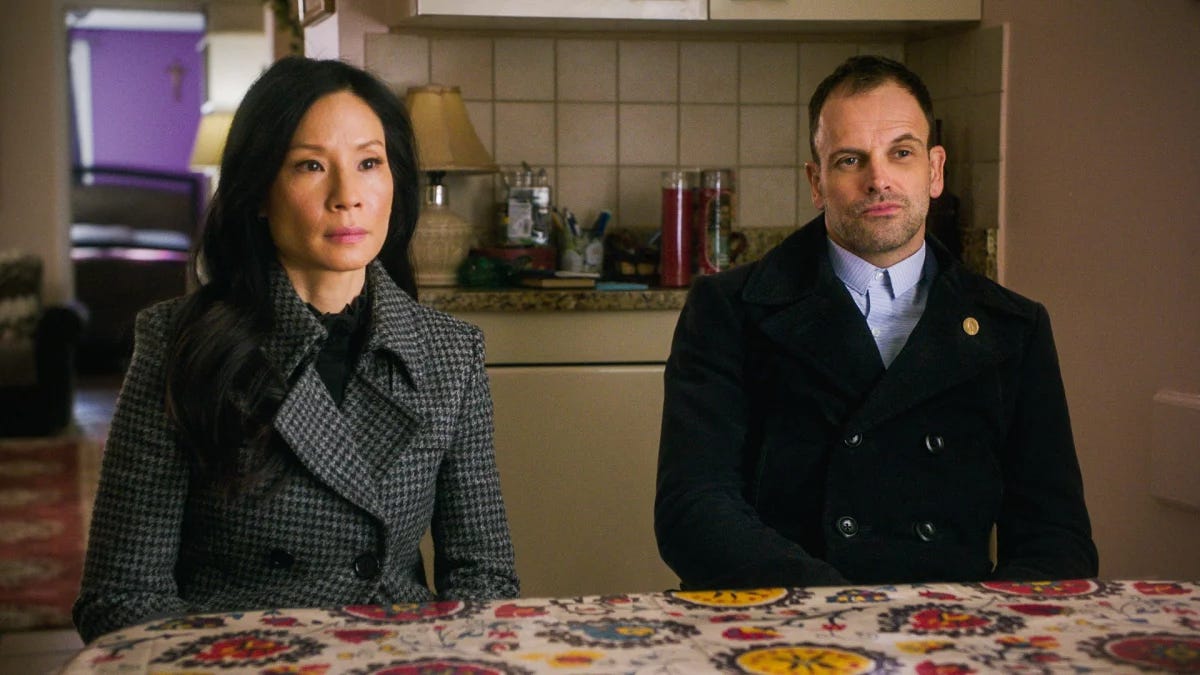
The myth of the alcoholic/addicted genius details the eventual collapse of a bright star. But what Sherlock has to learn is that being sober entails accepting that listening to the incessant drip of existence is better than the utter silence of oblivion. In Elementary, Sherlock’s disappointment with his sobriety is a momentary lapse before he goes back to meetings. It is better to last than to burn. There is no self-destruction to be dramatised. As Sherlock eventually learns, a mundane intimacy and domesticity with someone like Joan right now is what he has wanted since childhood. But only sobriety can offer the clarity required to know what and when this present is.